




Introduction to Hajj
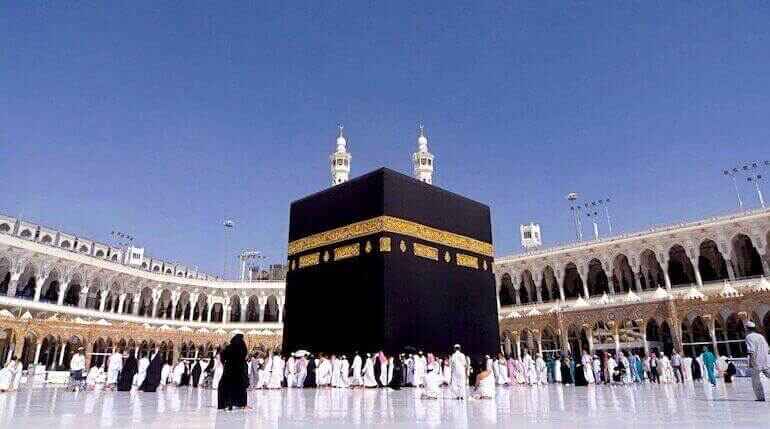
Hajj is the fifth pillar of Islam and is the greatest expression of Islamic faith and unity. It is a mandatory exercise to Muslims who are physically and financially fit to visit Makkah at least once in a lifetime. The focus on the financial capacity is supposed to make sure that a Muslim provides care to his family first. The fact that a Muslim must be healthy and physically fit to perform the pilgrimage is aimed at exempting other Muslims who may not be able to withstand the ordeal of traveling long distances.
The pilgrimage is the religious climax of a Muslims life and something every Muslim wants to make in his/her life. The less significant pilgrimage (Umrah) may be taken any time of the year. Al-Hajj is however done on a. five days between the ninth and the twelfth month of the Muslim lunar calendar, Dhu Al-Hijjah.
Until very recently and in recent decades, a very small number of people could afford to travel to Makkah and perform the pilgrimage. This was attributed to the sufferings experienced, the duration taken in the journey and the costs involved in the journey. The pilgrims who had traveled to the distant end of the Islamic world often took up a year or longer to make the journey and many of them died in the process not only because of the facilities that were absent on the roads leading to Makkah but also in Makkah itself.
The situation with the Hajj started becoming better in the era of king Abdul Aziz Ibn Abdul Rahman Al-Saud, who established the modern Kingdom of Saudi Arabia. The pilgrims, their well-being, and comfort were secured and the safety of the pilgrims was taken care of by introducing major programs. Efforts were made also to develop facilities and services that will ensure better housing, health care, sanitation, and transportation.
Nowadays, even though the ceremonies of the sacred places in Makkah and its environs have not changed since the era of the Prophet, the location of the pilgrimage and the services that the pilgrims can enjoy is richly different as compared to what was ever present in the most distant periods of history. Suffering was a normal experience and was accepted as part of the pilgrimage and Muslims who embarked on the pilgrimage would traditionally appoint a relative or a trusted individual within the community as the executor of their wills in case they did not come back after the pilgrimage.
The pilgrimage is now made easy by Muslims, they are easily welcomed to Saudi Arabia on arrival, and they are offered the best and latest facilities as well as efficient services. The modern pilgrims do not have to deal with the same life distractions that were present in their predecessors, which means that they are able to concentrate on the spiritual side of Hajj.
* The Rites of Pilgrimage
This huge assembly of almost two million people kicks off after sunrise on the ninth of the Islamic month of Dhu Al-Hajjah and travels a distance of around eight miles to the Plain of Arafat, paying a visit to Muzdalifah along the way. A large number of people attend the noon and afternoon prayers in the Nimerah Mosque, which is a tradition established by the Prophet.
As the pilgrims approach Arafat in midmorning, they are astonished to see the huge plain being blanketed by what seems to be a dense fog despite the fact that the temperature is approximated at 90 degrees Fahrenheit. By using thousands of sprinklers mounted on 30-foot poles, and separated by about 50 feet, this optical illusion means that fine spray of water is dispersed to bring coolness. Millions of containers of chilled water are thrown out of refrigerated trucks that are placed along the pilgrim route.
Despite these precautions, the wail of sirens is ever present as hundreds of ambulances pick up pilgrims suffering from heat exhaustion and transport them to special clinics for treatment. The more serious cases are evacuated by helicopter to hospitals.
Pilgrims are required to spend the day in the plain, performing what is called the Standing at Arafat. Here they also visit the Mount of Mercy and ask for Allah's forgiveness for any sins committed and for blessings. Facilities have also been set up here to feed the pilgrims and meet any requirement they may have.
At night, when the sun has set this river of pilgrims goes back again to Makkah but halts at Muzdalifah until the brightness of day shows on the eastern horizon. In this case, the pilgrims grab seven pebbles and bring them to Mina. After entering the valley, they walk into the valley on a 100-yard-wide, two-tiered pedestrian walkway leading to the three stone pillars known as the Jamarat, which are symbolically intended to represent Satan. The pilgrims must toss the pebbles they have gathered at the Stone Pillar of Aqabah praising God in a symbolic renouncement of Satan. When the pilgrims are walking the walkway they join those that have already moved to the pillar and upon throwing their pebbles they move towards the Makkah direction around the exit ramp. The crowds are guided by signs in different major languages.
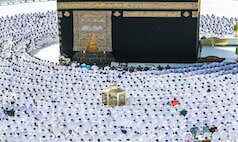
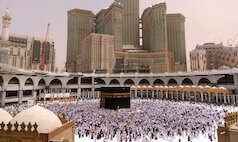
The pilgrims then proceed on foot, almost four miles, over pedestrian walkways to Makkah, where they perform the tawaf, the circumambulation of the Ka'abah, seven times counterclockwise, in the Holy Mosque. They then do sa'ay, the running between Safa and Marwa in an air-conditioned building. Male pilgrims are then expected to shave their heads but it is okay to cut a strand of hair for both men and women. Here the pilgrims have a sacrifice that is an animal, they give the meat to the needy. More than 1,600,000 animals are slaughtered in contemporary abattoirs which fulfill the meat processing during the three days of the Eid. Distribution of this sacrificial meat goes to those in need in some 30 countries.
The pilgrimage rites have been fulfilled. Pilgrims leave Ihram and put on their regular outfits yet stay at Mina during Eid Al-Adha, the festival that marks the end of the Hajj. During the following two days they stoned the three pillars of the Jamrat, and then carried out the Tawaf Al-Wida', the Farewell Circumambulation of the Ka'bah, before they left the city.
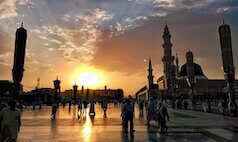
Although this is not a mandatory event during the Hajj, a majority of pilgrims pay a visit to the Mosque of the Prophet in Madinah when they visit the Kingdom.
* A Spiritual Journey
During the Hajj, the most massive assembly of people on the planet every year the pilgrimage is characterized by a complete lack of any disagreements and conflict among the pilgrims. Etiquette and service to others is the order of the day. The entire pilgrimage and pilgrims are filled with peace, serenity and piety.
The pilgrim at the end of the Hajj is deeply disturbed with the feeling that he or she experienced a life-altering spiritual experience. They return with pride in their having successfully completed a ritual in the honor of God and in being a part of a very large family of people sharing common religious beliefs. And they have gained a humility, inner peace, community and strength that can last a lifetime.
Hajj is done once a year and Umrah can be done throughout the year. If he doesn't have enough money to offer Hajj, then he should make a visit to Allah's house for Umrah, and refresh his belief and devotion.
Before applying to our company for hajj and Umrah this year, the following basic things must be there in the potential pilgrim's hand. With these a travel agent will not accept the Hajj and Umrah application.
- Renewed and valid passport.
- Passport size photographs.
- Hajj and Umrah visa service agents process visa applications.
- The application will not be accepted without a Mahram for female candidates.
- Passports of non-Nigerians must present their permanent residency in Nigeria.
- Children accompanied by parents should have a passport and visa.
The Muslims are religious people towards Allah's House and wish their Pilgrimage to be comfortable and with reliable arrangements. Therefore, they select the packages offered by the operators which they find appropriate for them for the Hajj and Umrah. Even they tailor the packages based upon their needs.
Nigerians use holidays such as Easter holidays, Ramadam holidays and New Year holidays to visit their Haajj and Umrah. The potential candidates should therefore choose the appropriate Umrah package for these holidays and apply well in advance since it's the high season for Umrah applications.
* Unbeatable Prices
In fact, we don't leave any stone unturned in providing the very best in accommodation (3-4-5 star hotels) for our fellow Muslims who wish to have the experience of this sacred journey. Just remember that, in essence, we are providing a unique and exact offer, which can be sometimes tricky and time-consuming to find exclusive offers in top-notch hotels. It is our aim to make your comfort our utmost priority, which is the reason we take it one step further to create the Umrah Package above your expectations.
* 24/7 Support & Assistance
Our packages have been well planned for Hajj and Umrah and consist of hotel and accommodation, transportation and flight tickets for direct/indirect return flights to Pakistan, and guiding after-sales for all our clients to deal with in any aspect they need. Throughout the year the bond of trust and integrity is coming back at us. We take into consideration every detailed aspect in a deal before we make the packages. If you want your ideal trip to be designed, then you can trust us to do that!
* Reliable Accommodations
Our services provide rooms that are convenient to both of the holy mosques to clients intending on traveling for religious purposes. Regardless of whichever place tourists are located, we make sure that everyone planning to go for Umrah with kids gets the best Umrah packages for family. Furthermore, it won’t be an issue in terms of dates; people are free to select any days required, even the school breaks in December, Easter, and the February half-term holiday. No matter what stage of the Umrah they are at, whether it is their first-ever journey or they are traveling solo, we promote the travelers’ benefit. It should be noted that prices are pretty economical, and we definitely appreciate the users.
* Convenient Flight Connections
Airlines that operate at Murtala Muhammad International Airport in Nigeria on routes devoted to Hajj and Umrah include Saudi Arabian Airlines, Turkish Airlines, Emirates, Qatar Airways, Egypt Air, Royal Jordanian Airlines, Gulf Air, Oman Air, and Etihad Airways, with most of them flying to Jeddah or Madinah.
* Special Arrangements
Disabled travelers as well as seniors and families with small children have several accommodations options that include additional items and services such as cots, wheelchairs, meals, etc. Despite the fact that we do not offer a prayer facility within our premises, we can help in arranging practical hotels and guesthouses just a few minutes away from Masjid Al Haram. The Kingdom of Saudi Arabia is home to people that seek the blessings of Allah, which is why the government is striving hard to make every type of facility available to these guests. The hotels and restaurants have every modern convenience that would be expected.
Don't have an account?
Create an account to manage your bookings easily and securely. View recent trips, save your wishlists, and share your searches with friends and family.
Create Account